20 May 2026
We had the pleasure of speaking with the winner of the 2026 REFORC Book Award. Discover more about her award-winning publication and academic work: read the full feature here.
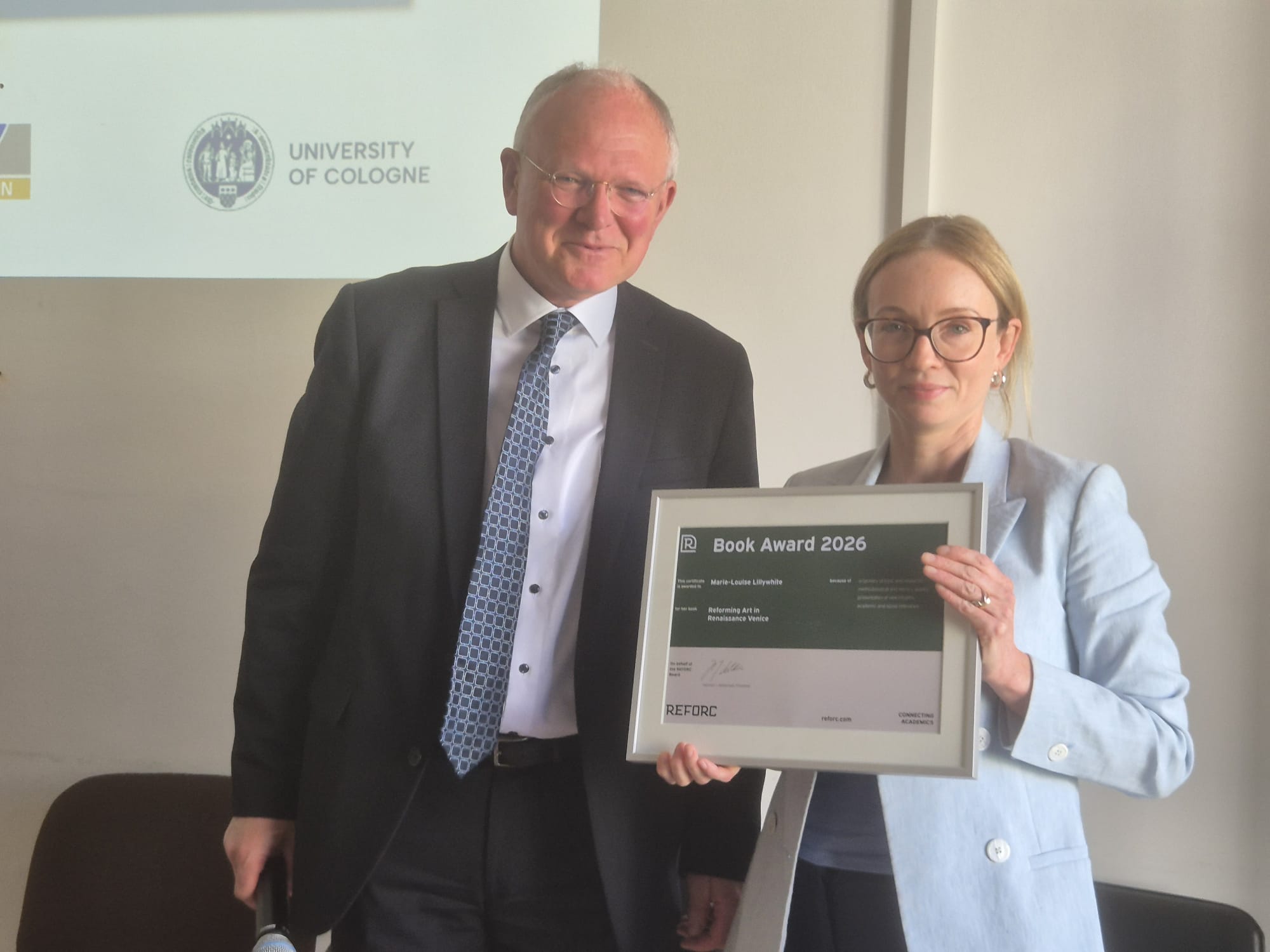
Marie-Louise, What inspired you to write this book?
My main inspiration was spending a great deal of time in Venice during my undergraduate and MA degrees. As a result of visiting so many churches in both the city and the wider Venetian mainland, I became really interested in artists like Veronese and Tintoretto, both of whom feature in the book. I was also interested in the Reformations and how they might have impacted art, but I wasn’t completely satisfied with the predominant narrative of Venice’s resistance to the Counter-Reformation (there was resistance, but this was certainly exaggerated by some historians and it was not completely unusual) nor some of the generalisations about how the Church sought to control visual outcomes, since the material evidence seemed to me to contradict or at least nuance some of these ideas.
Could you briefly explain what the main message of your book is?
A key message of the book is that this was an incredibly consequential age for the sacred image and that artists were powerful interpreters of contemporary spiritual values. Although cases like Veronese’s questioning by the Inquisition or the changes made to Michelangelo’s Last Judgment are given great attention by art historians (I too deal with them at the book), they remain very unusual. Censorship of images was haphazard and far from universally enforced, and we have to be very careful of taking the advice contained in treatises on devotional images or synodal instructions at face value. Local methods of enforcement described in archival records paint a very different picture of contemporary artistic freedom and the visual evidence shows us the great artistic variety that prevailed at the time.
In what way does your book differ from previous publications?
My book is likely far less sensationalist. To give one example, I’m suspicious of some of the wilder iconographic readings that have insisted on veiled heterodox meanings in devotional images that were on public display in Venice. This might be appealing for an audience, but the evidence hasn’t always been convincing and has sometimes been far too readily accepted. I also trace the significant architectonic changes that took place in Venetian churches as a result of patriarchal visitations ordering transformations that were felt to be appropriate to the spirit of the age. Although I show that new paintings were frequently commissioned as a result of this, I also point out the destruction that followed changes in taste, in some cases meaning that local architectonic variants were lost. So in the book I attempt to reach some balanced, broad conclusions about the impact of the Counter-Reformation on art and architecture in Italy, as well as maintaining a local emphasis on the peculiar case of Venice.
***
Thank you for the interview, Marie-Louise! We wish you all the best for your continued research.



