Vocal ensemble Ars Cantus will perform songs from: Angelus Silesius and Georg Joseph, Heilige Seelen-Lust oder Geistliche Hirten-Lieder, Breslau 1657.
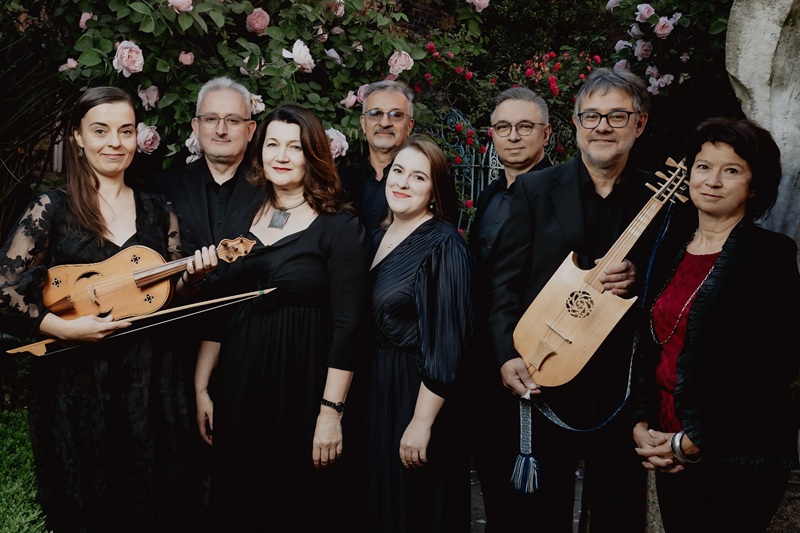
Ars Cantus was founded in 2000 as a vocal ensemble affiliated with the Wrocław Chamber Choir (Wrocławscy Kameraliści), working under the artistic direction of Tomasz Dobrzański (a graduate of the Academy of Music in Wrocław, who also studied at the Conservatoire Populaire in Geneva and at the Schola Cantorum Basiliensis). The ensemble performs early music ranging from the Middle Ages to the early Baroque. An important part of its repertoire consists of historic musical works from Wrocław and Silesia, dating back to the fourteenth century and often presented for the first time in many centuries. Ars Cantus has appeared at numerous festivals in Poland and abroad, receiving many awards. The ensemble has recorded several albums, including Musica Rediviva from sixteenth- and seventeenth‑century Wrocław prints (2003), and Musica Figurata in Wrocław and Silesia in the 14th and 15th Centuries (2005). As part of the Rudolphina Project, which documented musical prints from the library of Duke George Rudolf of Legnica/Liegnitz, Ars Cantus recorded selected compositions by authors represented in that collection. In 2018 the ensemble released the album The True Carmina Burana. Its most recent recording project (2025) features songs to the words of Angelus Silesius from the collection Heilige Seelen-Lust.
Aleksandra Hanus – soprano
Monika Wieczorkowska – soprano
Radosław Pachołek – alto
Maciej Gocman – tenor
Piotr Karpeta – bass
Tomasz Dobrzański – recorder, bagpipes, sordun
Maciej Kończak – theorbo
Mteusz Kowalski – viola da gamba
Ewa Prawucka – chest organ
Angelus Silesius (Johannes Scheffler, 1624–1677), a mystic, physician, poet, and author of polemical writings, was a figure of immense influence on seventeenth‑century Silesian culture. Born in Wrocław into a Lutheran family, he converted to Catholicism in 1653 and became a fervent apologist of his new confession. Nevertheless, his poetic works—especially Cherubinischer Wandersmann (The Cherubic Wanderer, Wien 1657), devoted to the mystical love of God—found a vivid reception also in Protestant circles, entering, among other places, Lutheran hymnals.
Heilige Seelen-Lust oder Geistliche Hirten-Lieder (The Soul’s Holy Desires, or Sacred Shepherd’s Songs, Breslau 1657) is a hymnal intended for domestic devotion. It contains more than 200 Advent, Christmas, Passiontide, and Easter songs, as well as various prayers and hymns. The poetic dimension of the collection centres on the motif of the Soul as the Bride loving Christ. These songs echo late Italian madrigal poetry on amorous themes; the shepherds and nymphs who sing these madrigals move within an Arcadian landscape. In comparison with the conventional poetics of the Italian madrigal, however, the collection offers a richer and more elaborate imagery associated with the theme of love. Although earthly love is replaced here by heavenly love, the author does not abandon corporeal connotations, nor the motifs of wine drinking and dancing.
The composer Georg Joseph (c. 1620–c. 1668), who remained in the shadow of the great poet, created the musical settings for the songs of Heilige Seelen-Lust. Little is known about him, except that in the mid‑seventeenth century he served as Kapellmeister to the Bishop of Wrocław/Breslau. His melodies to the texts of Angelus Silesius, together with engravings after drawings by the eminent Silesian Baroque painter Michael Lucas Leopold Willmann, were included in the Krzeszów/Grüssau Way of the Cross (Schmertzhaffter Lieb und Creutz-Weeg, Glatz 1682). Thanks to these prints, many of his melodies became widely disseminated and eventually found their way into religious hymnals. Today Georg Joseph is regarded as one of the more important composers in the German sacred song tradition.
***
The entrance is free. The concert will begin at 20:30.