Call for papers for an international conference at Villa Castelen in Augusta Raurica, Basel (Switzerland), 11-13 March, 2027. Organizers: Prof. Dr. Sonja Klimek, Prof. em. Dr. Barbara Mahlmann-Bauer, Prof. Dr. Kilian Schindler.
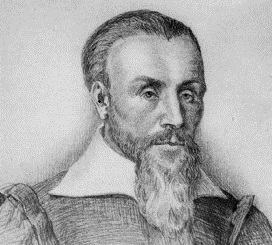
The heresy process against the Spanish Anti-Trinitarian Michel Servet, who sought refuge from persecution in Geneva in Summer 1553, and his execution on 27 October of the same year, occasioned an extensive controversy on how to deal with religious nonconformists in a Christian commonwealth. Sebastian Castellio, Professor of Greek at the University of Basel, protested against Calvin’s role in the exaction of Servet and the persecution of heretics more generally in several works, most notably in De haereticis an sint persequendi. This anthology, presumably a collaboration with other religious refugees in Basel and framed with contributions by Castellio himself (alias Martin Bellius and Basilius Montfort), was published anonymously in Basel in early 1554. Castellio also criticised religious persecution and violence in his Conseil à la France désolée (1562), in which he propagated religious tolerance under a confessionally neutral government as a remedy to the religious divisions in France and their escalating potential for violence. While Castellio’s advice evidently could not prevent the impending Wars of Religion, the potential of his Conseil was recognised by later generations from the 1580s onwards, and his polemical writings on tolerance, many of which remained unpublished during his lifetime, developed considerable influence in print publications and translations into French, German, Dutch, and English in the following decades.
Hans R. Guggisberg has partly elucidated Castellios afterlife from the sixteenth to the eighteenth century, and Castellio’s originality and significance for the history of tolerance has been recognised in more general surveys by Jean Lecler, Perez Zagorin, Rainer Forst, and Heinrich Schmidinger.[1] The purpose of this conference, however, is not only to identify further evidence of Castellio’s reception; we also aim to put a spotlight on the transmission and transformation of early modern arguments for tolerance under very different historical and political conditions, from the sixteenth century to the present. We therefore invite papers from the disciplines of early modern history, church history, history of law, philosophy, and literature that address Castellio’s role in the history of tolerance – but also the role of his contemporaries and successors – in light of the development of early modern arguments for tolerance. These include but are not limited to the following (all of which are also put forward by Castellio):
We welcome contributions on the development and transformation of these and related arguments in early modern theological and political treatises, popular print, poetry, and drama in the Netherlands, England, France, Poland, Transylvania, and wherever religious minorities protested against their suppression. We further invite contributions also beyond the early modern period, e.g. on the thought of the nineteenth-century French libres-penseurs, such as Castellio’s first modern biographer, Ferdinand Buisson (1841-1932), and twentieth-century dissidents during Nazi rule such as Stefan Zweig (1881-1942), author of Castellio gegen Calvin: Ein Gewissen gegen die Gewalt (1936), or the history of human rights, in which religious tolerance played such a central role. However, we do not view the history of tolerance as a teleological success story, in which sixteenth-century Protestant appeals to liberty of conscience supposedly anticipate an Enlightenment understanding of tolerance and lead straightforwardly to modern pluralist democracies. Instead, we understand the history of tolerance as a constant struggle for political, social, and religious forms of coexistence and recognition, which is marked by caesuras, ruptures, and setbacks and which paradoxically often owed decisive impulses to the experience of religious persecution.
As such caesuras in the history of tolerance, we understand either a) specific events that inspired contemporaries to reflect and write on tolerance and its limits, e.g.. the execution of Michel Servet in Geneva on 27 October 1553 or the St Bartholomew’s Day Massacre on 24 August 1572; b) significant publications on the subject of religious tolerance, e.g.: Bartolomé de Las Casas, Brevísima relación de la destrucción de las Indias occidentales, 1552/1571; Sebastian Castellio, De haereticis an sint persequendi 1554; Friedrich Spee SJ, Cautio Criminalis, seu de processibus contra sagas, 1631/32; Roger Williams, The Bloudy Tenent of Persecution, for Cause of Conscience, Discussed in a Conference between Truth and Peace, 1644; Baruch de Spinoza, Tractatus theologico-politicus, 1670; John Locke, A Letter concerning Toleration, 1689; Immanuel Kant, Die Religion innerhalb der Grenzen der bloßen Vernunft, 1793, 21794; Stefan Zweig: Castellio gegen Calvin oder Ein Gewissen gegen die Gewalt, 1936; or c) political changes (such as the succession of new monarchs or peace treaties), e.g. the demise of the Anabaptist kingdom of Münster in 1535; the Peace of Augsburg 1555; the reign of Sigismund II August of Poland-Lithuania (1548-1572) and the Warsaw Confederation in 1573; the French Wars of Religion and the Edict of Nantes under Henry IV in April 1598 (and its revocation under Louis XIV in 1685); the emigration of Puritan dissenters as of 1620 and founding of North American colonies as laboratories of intra-Christian tolerance and forms of co-existence with indigenous populations; Déclaration des droits de l’homme et du citoyen, 16 August 1789; The Universal Declaration of Human Rights, 10 December 1948.
We welcome contributions in German, English, or French that thematise such caesuras in the history of tolerance and the ways in which they affected the use of arguments for toleration, such as the ones outlined above, in changing social and political contexts. Contributions by early career researchers are particularly welcome. Short abstracts are to be sent to Prof. em. Dr. Barbara Mahlmann-Bauer by 30 November 2026.
A more extensive call for papers (in German) with further examples and a selective bibliography is expected to become available on the website of the International Castellio Society.
[1] Hans R. Guggisberg, Sebastian Castellio, 1515-1563: Humanist and Defender of Religious Toleration in a Confessional Age, 1997, trans. Bruce Gordon, Aldershot 2003; Joseph Lecler, SJ, Toleration and the Reformation, 2 vols, 1955, trans. T. L. Westow, New York, 1960; Perez Zagorin, How the Idea of Religious Toleration Came to the West, Princeton, NJ, 2003, 93-144; Rainer Forst, Toleration in Conflict: Past and Present, 2003, trans. Ciaran Cronin, Cambridge 2013, 96-130; Heinrich Schmidinger, Toleranz – auch eine Geschichte Europas, Basel 2024, 122-130.
[2] For this and the following point, see Rainer Forst, Tolerance in Conflict, 2013, 414.



