Stone and Brick versus Wood and Clay. Building Materials of Protestant Churches in Silesia in the 16th to 18th Centuries in the Light of Legal Provisions and Pastoral Practice
This talk argues that the choice of building materials in Silesian Lutheran churches between the sixteenth and eighteenth centuries was not merely a matter of economic constraint or legal coercion, but a theologically and pastorally charged decision that shaped confessional identity. From the early spread of Lutheran worship in Silesia, churches were erected only when pastoral necessity required it, drawing on locally available materials. Where stone and brick were accessible, new buildings adopted forms and surface treatments inspired by italianate aesthetics, while regions lacking such resources relied on wooden post-and-beam structures filled with clay and organic materials.
A decisive shift occurred after the Peace of Westphalia, when imperial regulations restricted Protestant worship and prescribed that the three so-called Peace Churches be constructed as “non-permanent” wooden buildings. Despite these constraints, the Peace Churches developed monumental spatial forms and richly articulated interiors, demonstrating that material impermanence did not preclude architectural dignity. At the same time, numerous border churches emerged along confessional frontiers, often of the most modest construction. In these cases, pastoral practice played a crucial role: through rhetorically sophisticated sermons and biblical typology, pastors sacralized even the humblest wooden structures, transforming them conceptually into the House of God.
The long-term impact of this experience became evident after 1707, when the Altranstädt Convention permitted the construction of new Lutheran Churches of Grace. Significantly, several communities deliberately chose wooden construction despite being legally free to build in stone. The lecture thus demonstrates that material choices in Silesian Lutheran church architecture reflect an interplay of legal regulation, resource availability, and pastoral strategies, revealing wood and clay as confessional media no less meaningful than stone and brick.
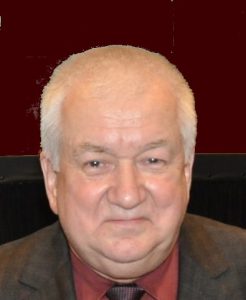
Harasimowicz, Jan, PhD (1984), Habil. (1991), Dr. Theol. h. c. (2010). Studied art history and Philosophy at the University of Wrocław, and art history and Protestant theology at the University of Zurich; a graduate in Art History from the University of Wrocław. In 1975–1998 employed in the Chair (from 1993 Institute) of Art History of the University of Wrocław. In 1999–2002 extraordinary professor of Art History in the Early Modern Period in the Nicolaus Copernicus University, Toruń. In 2003–2020 ordinary professor of Art History in the Early Modern Period in the University of Wrocław, head of the Department of the History of Art of the Renaissance and Reformation. Since 2010 director of the University of Wrocław Museum. Since 2000 member of the Historische Kommission für Schlesien, and since 2008 member of the Comité International d’Histoire de l’Art. Recipient of individual awards of the Minister of Science and Higher Education for outstanding scholarly achievement (1987, 1993, 2011); recipient of the Silesian Culture Award of the State of Lower Saxony (2004), laureate of the Scholarly Prize of the City of Wrocław (2020). Awarded honorary doctorate by the Theological Faculty of the Martin Luther University Halle and Wittenberg (2010). In 2004–2024 co-organiser of the Polish-German seminars Art and Religion co-organised by the Universities at Wrocław, Halle, and Siegen. In 2013–2024 the head of and principal investigator on the research project ‘Protestant Church Architecture of the 16th–18th Centuries’, funded by the Polish National Science Centre.

