14 October 2026
We are pleased to introduce the plenary speakers for the Sixteenth Annual REFORC Conference, taking place 7-9 June at the Institute for Swiss Reformation Studies in Zurich.

Our speakers will present the latest research on the overarching theme for the plenary lectures, Defining, Demonstrating, and Defending Identity and Alterity in the Reformation Era. Drawing on a wide range of disciplinary approaches and scholarly perspectives, they will explore how identities were shaped, expressed, contested, and defended during this transformative period in history.
Together, the plenary lectures promise to offer fresh insights, stimulating discussion, and new perspectives on the complex dynamics of identity and alterity in the Reformation era.
Arne Bugge Amundsen
Professor emeritus University of Oslo, Department of Culture, Religion, Asian and Middle Eastern Studies
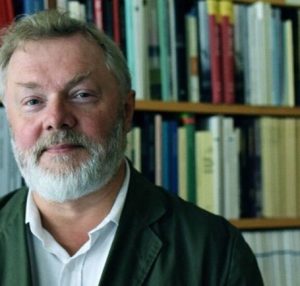
Research fellow at the Institute of Swiss Reformation Studies, University of Zurich

Conflict over Theological Truth – Polemical Publications as Strategies for the Formation of Confessional Identity in the 16th Century
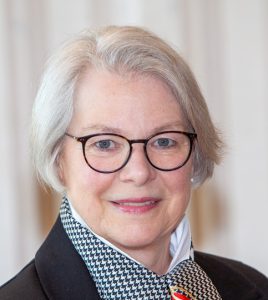
Irene Dingel was professor of historical theology at Goethe University Frankfurt am Main from 1994 to 1998 and a professor of church and dogmatic history at Johannes Gutenberg University Mainz from 1998 to 2022. From 2005 to 2022, she served as director of the Leibniz Institute for European History in Mainz, Department of Western Religious History. Since 2022, she has been a Senior Research Professor at Johannes Gutenberg University and the Academy of Sciences and Literature | Mainz. She is a full member of this academy and a recipient of the Rhineland-Palatinate Order of Merit. In 2020, she was awarded an honorary doctorate from the University of Strasbourg, and in 2025, an honorary doctorate from the University of Copenhagen.
Irene Dingel has published numerous works, particularly on the history of the Reformation, the formation of confessional groups and the culture of controversy in the 16th century. From 2003 to 2022, she directed the research and editorial project “Controversia et Confessio: A Collection of Sources on the Formation of Confessions and Confessionalization (1548–1577/1580)”. She currently leads the long-term research projects “European Religious Peace. Digital” (EuReD) and “Flacius Correspondence. Digital.”

Tom Hamilton’s research focuses on the social and cultural history of early modern Europe, especially France in the sixteenth and seventeenth centuries. His most recent book is, A Widow’s Vengeance after the Wars of Religion: Gender and Justice in Renaissance France, published by Oxford University Press in 2024. It demonstrates how plaintiffs like the powerful widow Renée Chevalier revitalized the practice of justice after France’s sixteenth-century troubles, and reshaped the laws of war in the process. This book was awarded the Natalie Zemon Davis Prize by the Sixteenth Century Society. Tom’s current research is supported by a British Academy Mid-Career Fellowship and the Inventing Futures programme at Durham’s Institute of Medieval and Early Modern Studies. He leads the project Forging Social Solidarities during Religious Wars, which it asks how society can hold together when civil war breaks out because of religious differences.
Emilie Murphy
Senior Lecturer in Early Modern History and Director of the Centre for Renaissance and Early Modern Studies at the University of York
Defending English Catholicism in English Convents in Exile

Emilie has wide interests in the cultural and religious history of early modern England, and English-speaking people abroad. Her earliest work considered the ways post-Reformation English Catholics used music to foster confessional identity in the face of persecution. Emilie’s other main interests surround travel and mobility, and she has published widely on multilingualism, transnationalism, linguistic encounter, power and identity, focusing on evidence from enclosed English convents in exile. Her most recent monograph was a pandemic-prompted pivot and Listening to Early Modern Travel Writing, for Cambridge University Press, is based on Purchas His Pilgrimes – the four volumes of travel narratives collated by the Protestant cleric Samuel Purchas. This short book brings her longstanding interests in acoustic culture together with her work on mobility and encounter, and argues that the epistemic value of sound and listening (real and imagined) was fundamental to early modern travel writing. Emilie is in the early stages of a new monograph project, provisionally dubbed Exiled Lives: English Nuns in Catholic Europe, which will offer a new cultural history of the thousands of women who left England from c.1600-1800 to join exiled English convents newly established on the continent.
Herman Selderhuis
Professor for Church History, Theological University Apeldoorn, President REFORC
Identity Markers of the Reformed Tradition
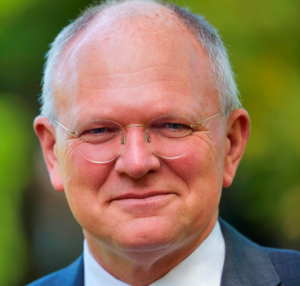
Herman Selderhuis (1961, Enschede, the Netherlands) is professor of church history and church law at the Theological University Apeldoorn (TUA). Among his positions are Director of the Refo500 Foundation, President of the Reformation Research Consortium (REFORC), President of the European Academy of Religion (EuARe), editor-in-chief of several international, academic book series, board member of several international academic organizations and of various European research projects. Selderhuis is an expert on the theology and history of Early Modern Christianity and has published extensively.
Sixteenth Annual REFORC Conference on Early Modern Christianity Event Page




