Fashioning Faith: Liturgical Vestments as Dress and Doctrine from Medieval to Early Modern Times
This plenary lecture is based on the general principle that clothing is more than just the object of changing and successive fashions and styles, but reflects the cultural and social environment in which it is designed, produced, and worn. From the perspective of the material turn in the study of medieval and early modern Christianity, the material dimension of religious practice is central: objects are not passive carriers of meaning but active agents in ritual and identity formation. This is particularly true of liturgical vestments: their evolution in style, iconography, and ornamentation—and the regional variations therein—not only accompanies but mirrors shifts in cultural and theological frameworks. The lecture adopts a longue durée perspective to trace the development of liturgical vestments in the Catholic Church from the late Middle Ages to the Early Modern Period, with particular attention to how these changes reflect evolving theological conceptions, including the impact of the Tridentine reforms. By way of contrast, it includes an excursus on the English Church after the Reformation, where the handling of liturgical textiles and the controversy surrounding vestments offers a window onto broader tensions between tradition and reform. In this way, the contribution shows how material culture not only supports ritual practices but also functions as a carrier and shaper of changing theological and cultural meanings.
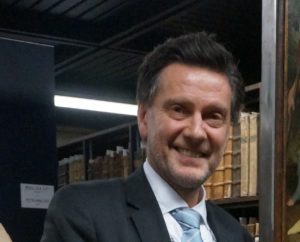
Wim François (PhD and STD 2004) is Professor of Early Modern Church and Theology and Academic Librarian of the Maurits Sabbe Library at KU Leuven (Belgium). His field of research concerns vernacular Bible translations, Bible commentaries and other aspects of the relationship between Scripture and tradition(s) in early modern Catholicism. He also studies the controversies about grace, free will and predestination in the mentioned period and in particular how they took shape in the Louvain theological milieu. Besides the big questions of early modern Christianity, in the most recent period he has also turned his attention to the material manifestations of early modern Catholicism, making, so to speak, the switch from text to textiles….

