10 November 2026
Issues of sin and guilt are never far away when it comes to bad payers. The notion that insolvent people are fraudsters has become a commonplace.
Today, it is not uncommon, especially in debates on public finance, to see economic-legal categories such as “creditors” and “debtors” pop up alongside terminology from the moral-religious sphere such as “saints” and “sinners.” In addition to an economic and legal meaning, in many languages the term employed to denote debt has religious and moral overtones, as is the case with the German word “Schuld”. Despite current tendencies by experts to reduce debt issues to technical legal and economic problems, moral connotations of debt persist in disputes about debt around the world. The articles collected in this volume show that at least part of the explanation lies in the deep, historical interconnectedness of law, religion, morality and the economy, especially in late medieval and early modern Europe.
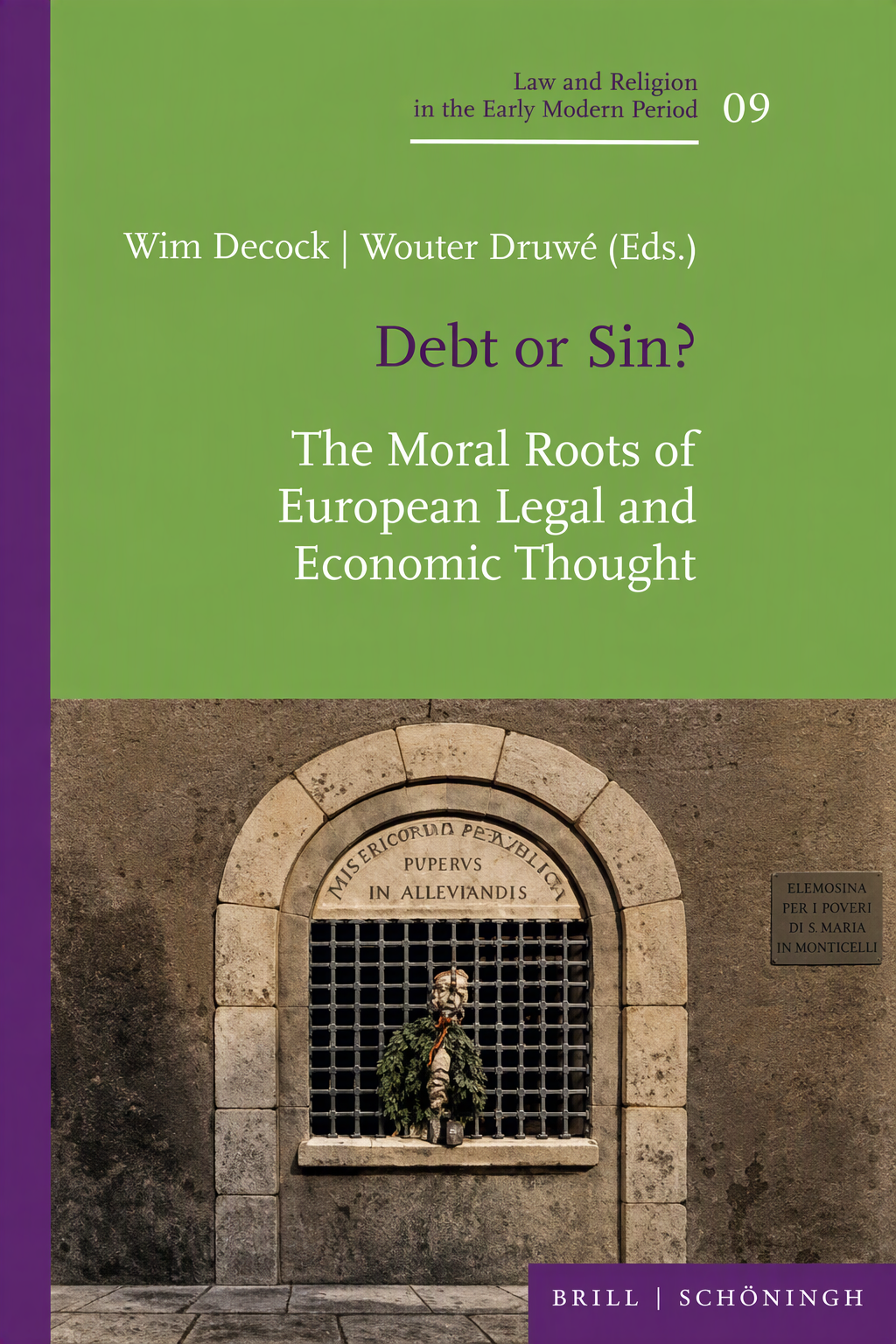
Volume Editors: Wim Decock and Wouter Druwé
Series: Law and Religion in the Early Modern Period / Recht und Religion in der Frühen Neuzeit, Volume: 9
Contributors: Wim Decock and Wouter Druwé, Rafael Van Damme, Daniel Schwartz, Hylkje de Jong, Antonia Fiori, Luisa Brunori, Cyrille Counot, Patricia Zambrana Moral, Fleur Stolker, Paola Astorri, Joost Hengstmengel, Maurits den Hollander, Stephen Bogle, Janwillem (Pim) Oosterhuis, Françoise Auvray and Jonathan Vandenbogaerde, Alain Wijffels